
Every substation, solar plant, telecom tower and building earthing system is designed around one number: how well the ground conducts electricity. In much of Saudi Arabia the ground is dry sand or rock with high resistivity, so an earthing design based on a guess can come out badly undersized. A soil resistivity test measures the real values at your site so the electrical designer can size rods, grids and conductors properly. EarthScape carries out soil resistivity and earthing surveys across Saudi Arabia (KSA) from our office in Riyadh.
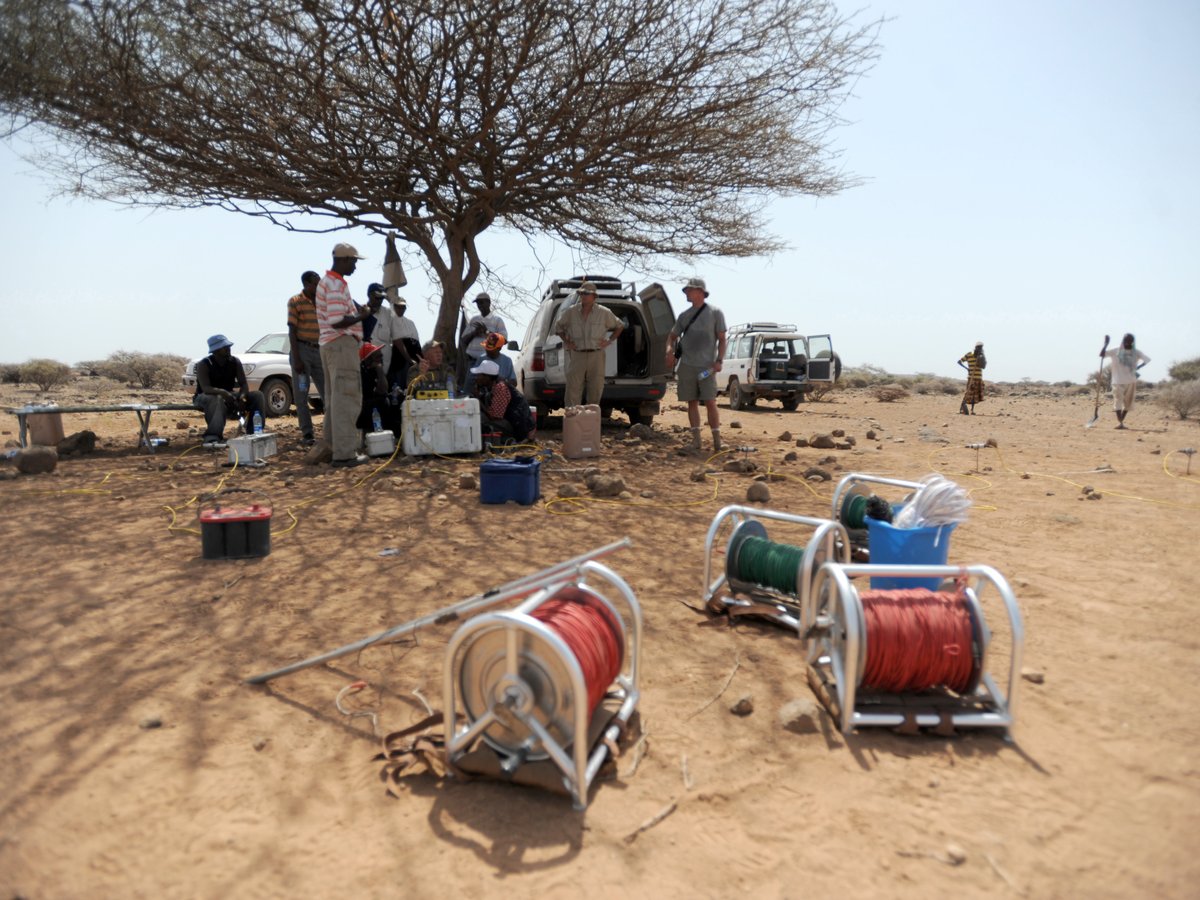
Who Needs a Soil Resistivity Test?
- Substations and switchyards before the earthing grid is designed
- Solar PV and wind projects
- Telecom towers and data centres
- Industrial plants, tank farms and pipelines (including cathodic protection design)
- Buildings, villas and compounds needing an earthing system
- Lightning protection design
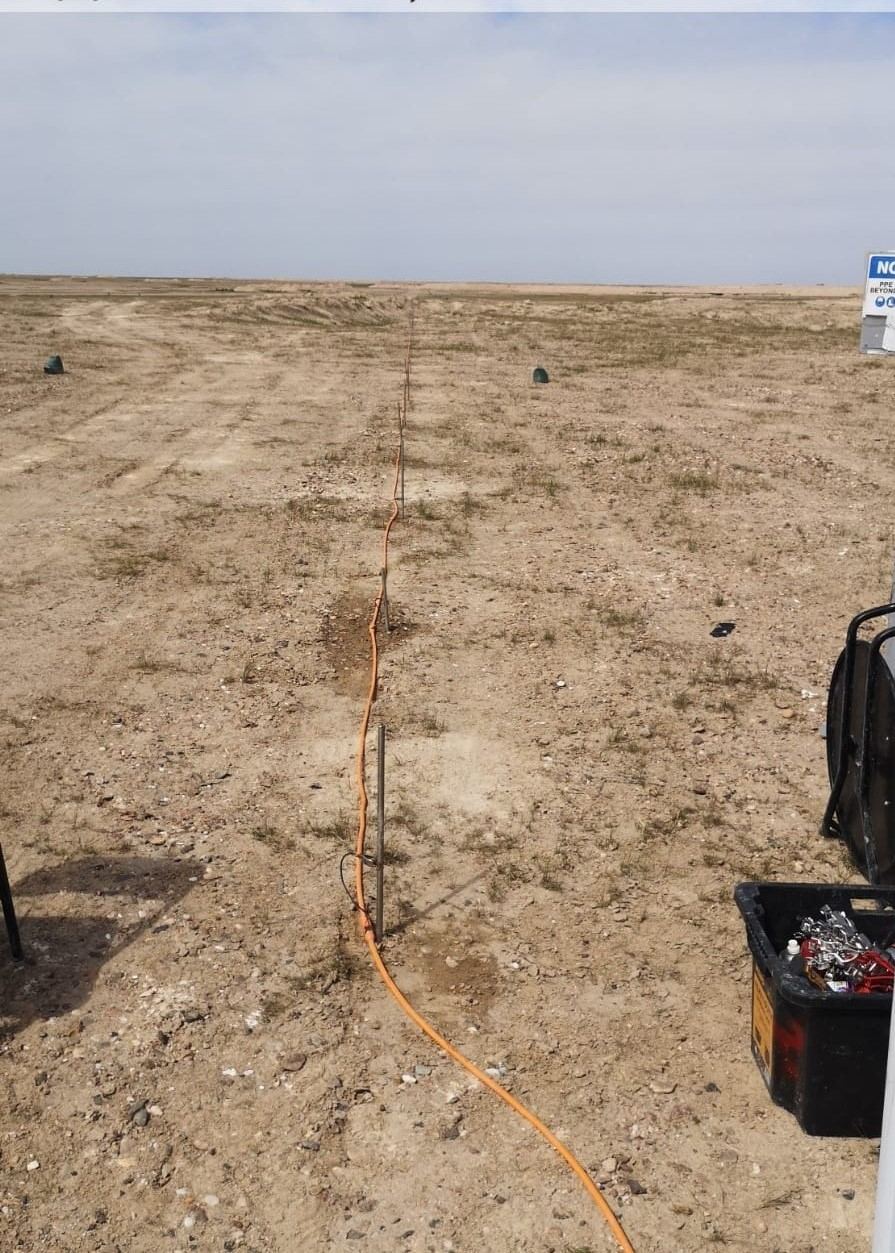
How We Test: The 4-Pin Method
We use the four-electrode method. Current is passed into the ground through two outer pins and the voltage is measured between two inner pins. The meter gives a resistance, and from the pin spacing we calculate the apparent resistivity in ohm-metres. Repeating the test at wider spacings shows how resistivity changes with depth.
Wenner Array
All four pins are equally spaced. It is simple to set out and easy to check, and it is the arrangement most earthing designers ask for. We usually run it at a series of spacings, for example from about 1 m up to tens of metres, depending on how large the earthing grid is.
Schlumberger Array
The inner pins stay close together while the outer pins move out. It needs fewer pin moves and gives a stronger reading at wide spacings, which helps on large sites and in very resistive ground.
Traverses and Directions
We run at least two traverses at right angles at each test location, and more on large plots, so changes across the site are not missed. Readings are logged in the field and checked as we go; odd values are repeated on the spot.
When You Need More Than Point Tests
Where the ground is clearly layered or changes across the site, a full Electrical Resistivity Tomography (ERT) survey gives a continuous resistivity section rather than a few points. It is also useful for long transmission and pipeline routes.
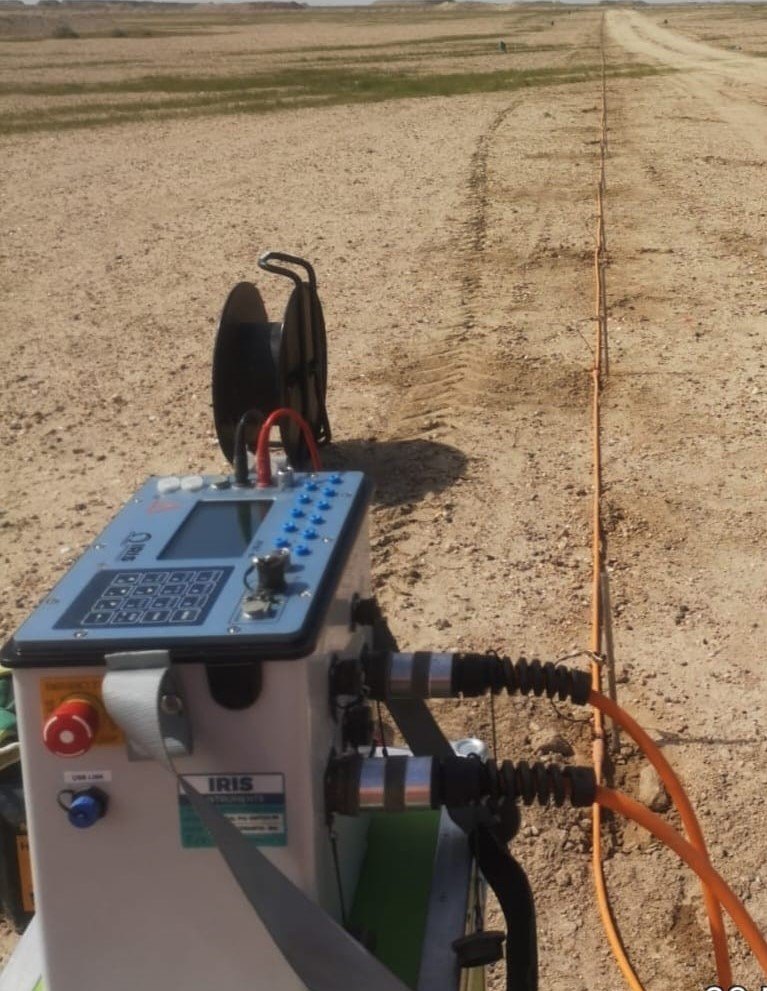
Things That Affect the Results
- Moisture and season: dry summer ground reads higher. We record conditions on the day so the designer can allow for it.
- Buried metal: pipes, cables and fences close to the line distort readings. We check for services first, using locators or a GPR survey if needed, and keep lines away from them.
- Rock near the surface: where pins can’t be driven, we note it and adjust spacing or location.
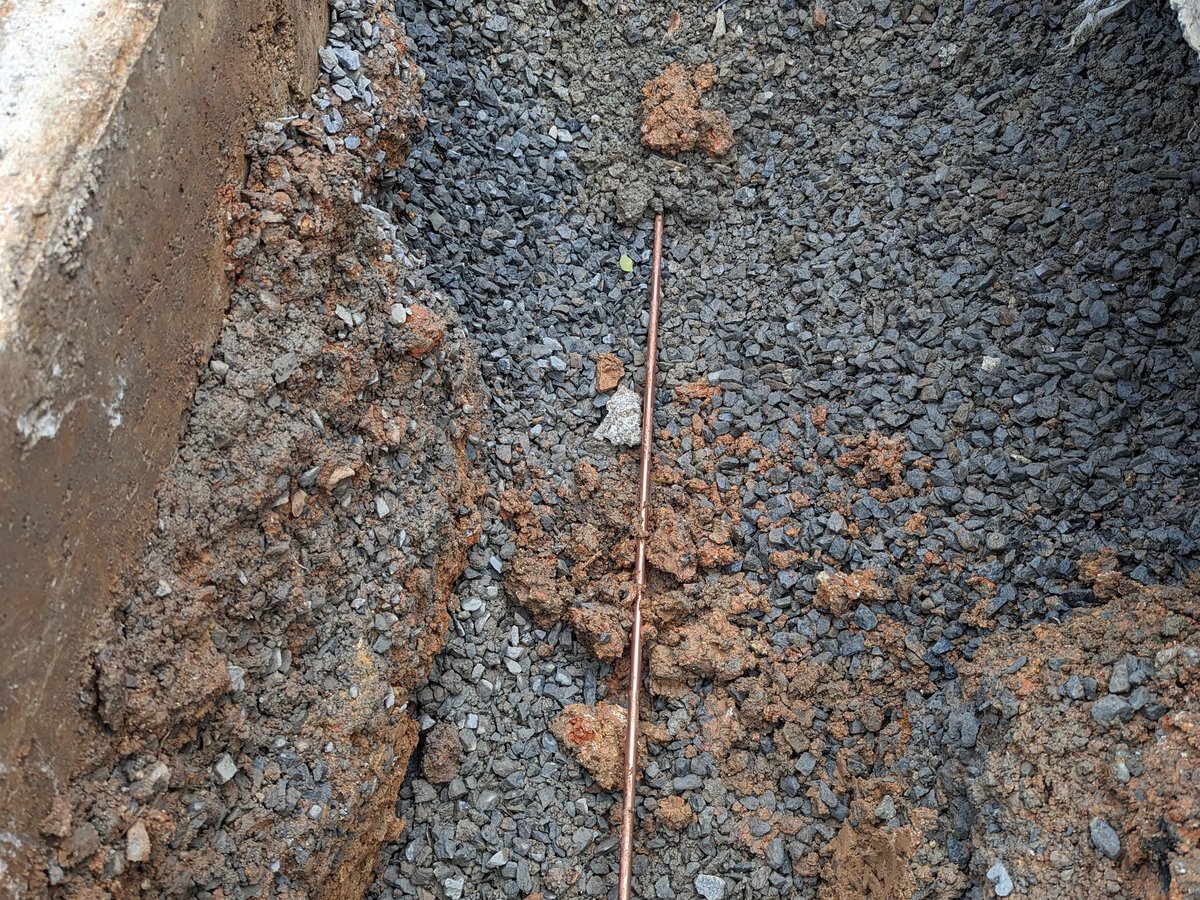
What You Receive
- Field data sheets: spacing, measured resistance and apparent resistivity for every reading
- Resistivity vs. spacing curves for each traverse
- A two-layer or multi-layer soil model for the earthing designer, where the data supports it
- Location plan of all traverses with coordinates
- Notes on site conditions, weather and anything that may have affected readings
Related Services
Soil resistivity data fits well with a geotechnical investigation (boreholes give the actual soil layers), seismic refraction or MASW survey for ground stiffness on plant sites, and a topographic survey of the plot.
Why EarthScape
We are a field survey company first: 5+ years in business, 100+ projects and 20+ experts, each with over 10 years in the field. We set out the lines properly, repeat what looks wrong, and hand over data your electrical engineer can use straight away.
This service is part of our wider geophysical survey in Saudi Arabia services, which combine several methods when a project needs them.
Frequently Asked Questions
What is the difference between the Wenner and Schlumberger methods?
Both use four pins. In Wenner all pins are equally spaced; in Schlumberger the inner pins stay close while the outer pins move out. Wenner is the common choice for earthing design; Schlumberger is faster for deep readings on large sites.
How many test locations do I need?
It depends on the size of the earthing grid and how uniform the site is. A small building may need one location with two traverses; a substation or solar plant needs several spread across the area. We propose a layout once we see the plot.
Is a soil resistivity test the same as an earth resistance test?
No. A soil resistivity test measures the ground itself before design. An earth resistance test checks a finished electrode or grid after it is installed. Tell us which one you need.
Does the season change the result?
Yes. Dry ground reads higher than moist ground. We record conditions on the test day so the designer can apply a sensible allowance.
Do you test outside Riyadh?
Yes. Our office is in Riyadh and we carry out soil resistivity tests anywhere in Saudi Arabia.
Request a Soil Resistivity Test Quote
Send us the site location, plot size or line lengths, and any drawings or borehole logs you already have. We will come back with a scope and quotation. Our office is in Riyadh and our crews work across Saudi Arabia (KSA).
- Phone: +966 55 679 8661
- Phone: +966 53 875 9468
- Phone: +966 58 288 4362
- Email: info@earthscapesurvey.com