Drilling a core through a slab looks simple until the drill hits a post-tension tendon or a live electrical conduit. At best, you lose a drill bit and a day. At worst, you damage the structure or injure someone. Concrete scanning takes a short time before the work and shows what is inside the concrete, so the hole can go where it is safe.
What is concrete scanning?
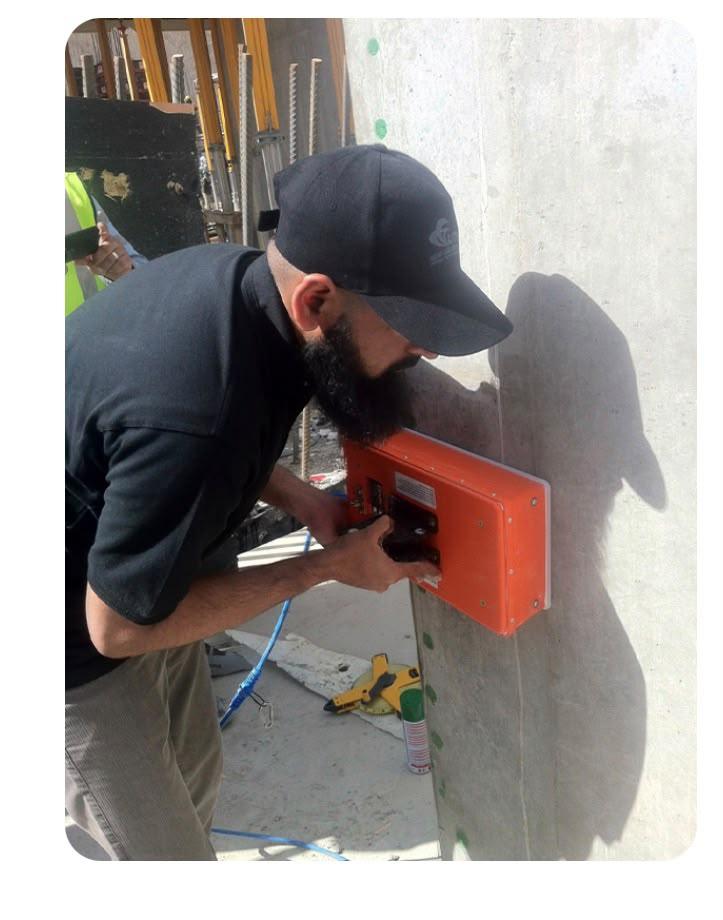
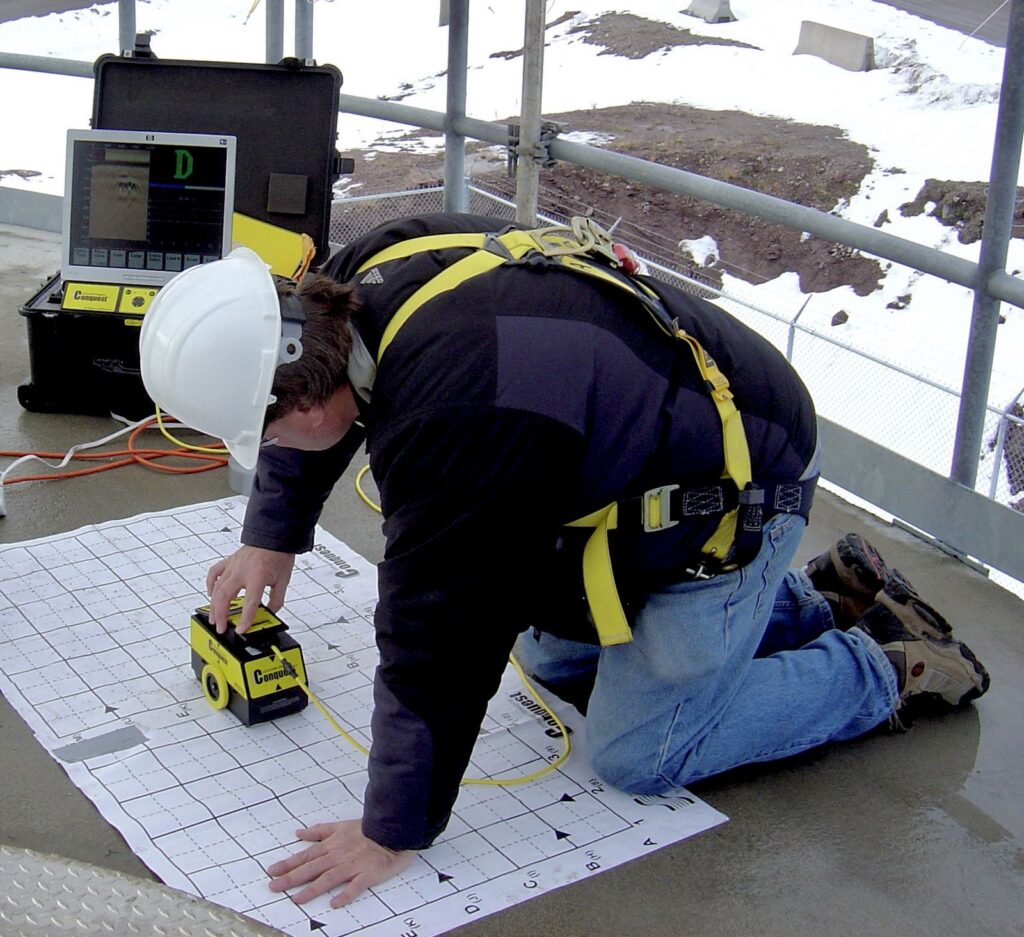
Concrete scanning uses a high-frequency ground penetrating radar unit designed for structures. The scanner is rolled across the slab, wall or column and sends radar pulses into the concrete. Steel, conduits, voids and changes in material reflect the signal back. On screen, each bar shows as a small arch, and the operator can mark its position and estimated depth directly on the surface.
What it can find
- Rebar layout, spacing and approximate cover
- Post-tension tendons and anchors
- Electrical conduits and plastic ducts embedded in slabs
- Voids, honeycombing and changes in slab thickness
- Metal and non-metal pipes running inside walls or floors
When to scan
- Before coring for new pipes, ducts and drains
- Before saw-cutting openings in slabs and walls
- Before installing anchors and fixings for heavy equipment
- During structural assessments, to check rebar against drawings
- When buying or renovating an older building without reliable drawings
In buildings with post-tensioned slabs, which are common in modern commercial projects, scanning before any penetration should be standard practice. Cutting a tendon can weaken the slab and is dangerous because of the stored force.
How a scanning job works
- We agree the locations where cores or cuts are planned.
- Each area is scanned in two directions to map bars and conduits in both layers.
- Findings are marked on the concrete with spray paint or markers, and safe drilling spots are shown clearly.
- Where needed, we provide a short report with photos and scan images for the record.
Limits to be aware of
- Scanning depth is limited. Typical concrete scanners see roughly the top few hundred millimetres, depending on the unit and the concrete.
- Very dense rebar can hide what lies beneath the top layer.
- Wet or very new concrete weakens the signal.
- Depths are estimates and depend on calibration for the concrete type.
For large areas or full building assessments, concrete scanning is often combined with drawings review and, where needed, small investigation openings to confirm critical findings.
Concrete scanning vs X-ray
Radiography (X-ray) gives very detailed images but needs access to both sides of the element, radiation safety controls and area evacuation. GPR scanning works from one side, needs no exclusion zone, and gives results on the spot, which is why it is the usual choice on live sites.
Frequently asked questions
Can concrete scanning see through a slab?
It sees into the slab up to its depth limit, usually enough for most floor slabs and walls. Very thick elements may need scanning from both sides.
Can it tell live conduits from dead ones?
GPR shows the conduit but not whether it is live. Where needed, we add an electromagnetic locator to detect current-carrying cables.
How long does it take?
Marking a few core locations often takes under an hour. Larger areas are priced by the number of locations or by the day.
Book concrete scanning
EarthScape provides rebar and concrete scanning across Saudi Arabia for contractors, MEP teams and building owners. For buried services outside the building, see our GPR utility surveys. Send us your locations through our Get a Quote page.