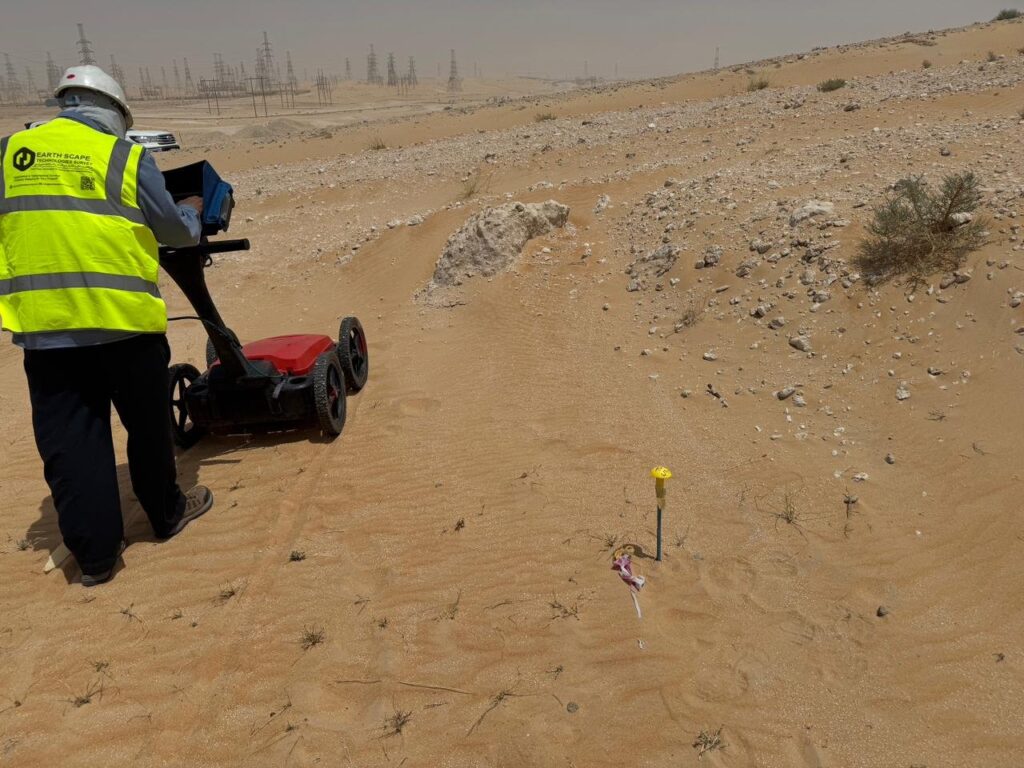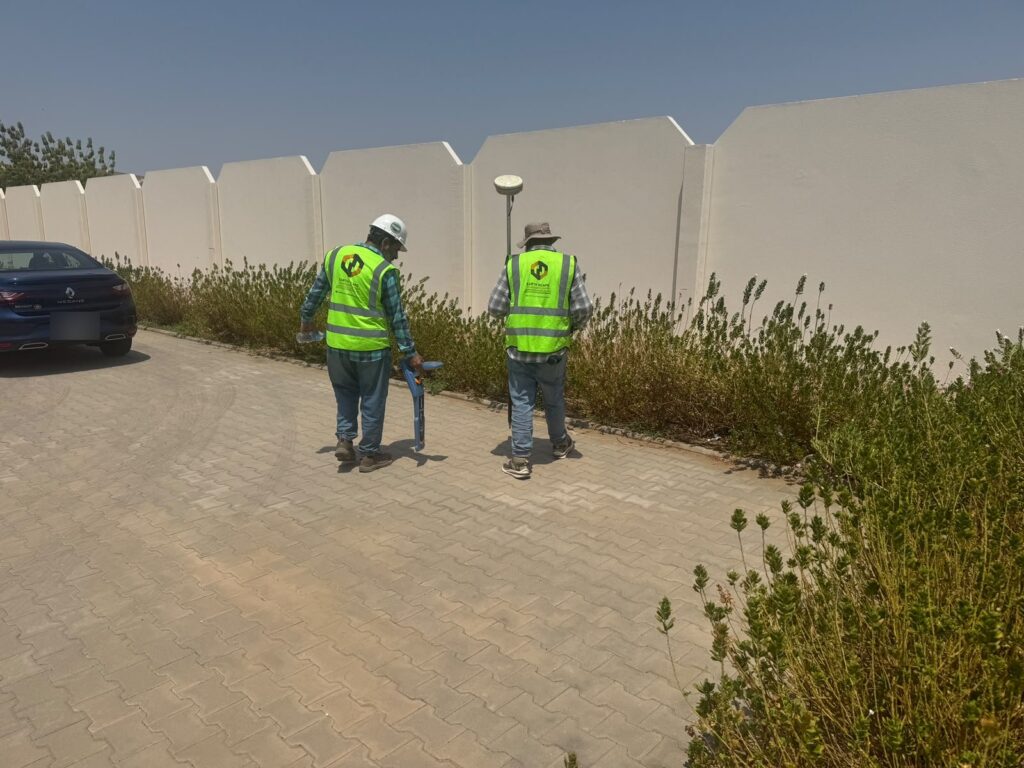
We are often asked whether a client should pay for a GPR survey or just dig trial pits. It is a fair question, because both are used to find buried utilities. But they do different jobs. GPR tells you where things are likely to be across the whole site. A trial pit tells you exactly what is at one spot. The projects that avoid utility strikes are the ones that use both, in the right order.
What GPR does well
Ground penetrating radar sends radio waves into the ground and records reflections from buried objects. Combined with an electromagnetic cable and pipe locator, it can map metallic and non-metallic services over large areas quickly, without disturbing the ground.
- Covers the whole site, not just a few points
- Finds services that are not on any record
- Non-destructive and fast
- Gives a drawing the design team can use
Its limits: depth is estimated, not measured; signals weaken in clay, wet or saline ground; and closely spaced services can be hard to separate. GPR shows that something is there, but not always exactly what it is.
What a trial pit does well
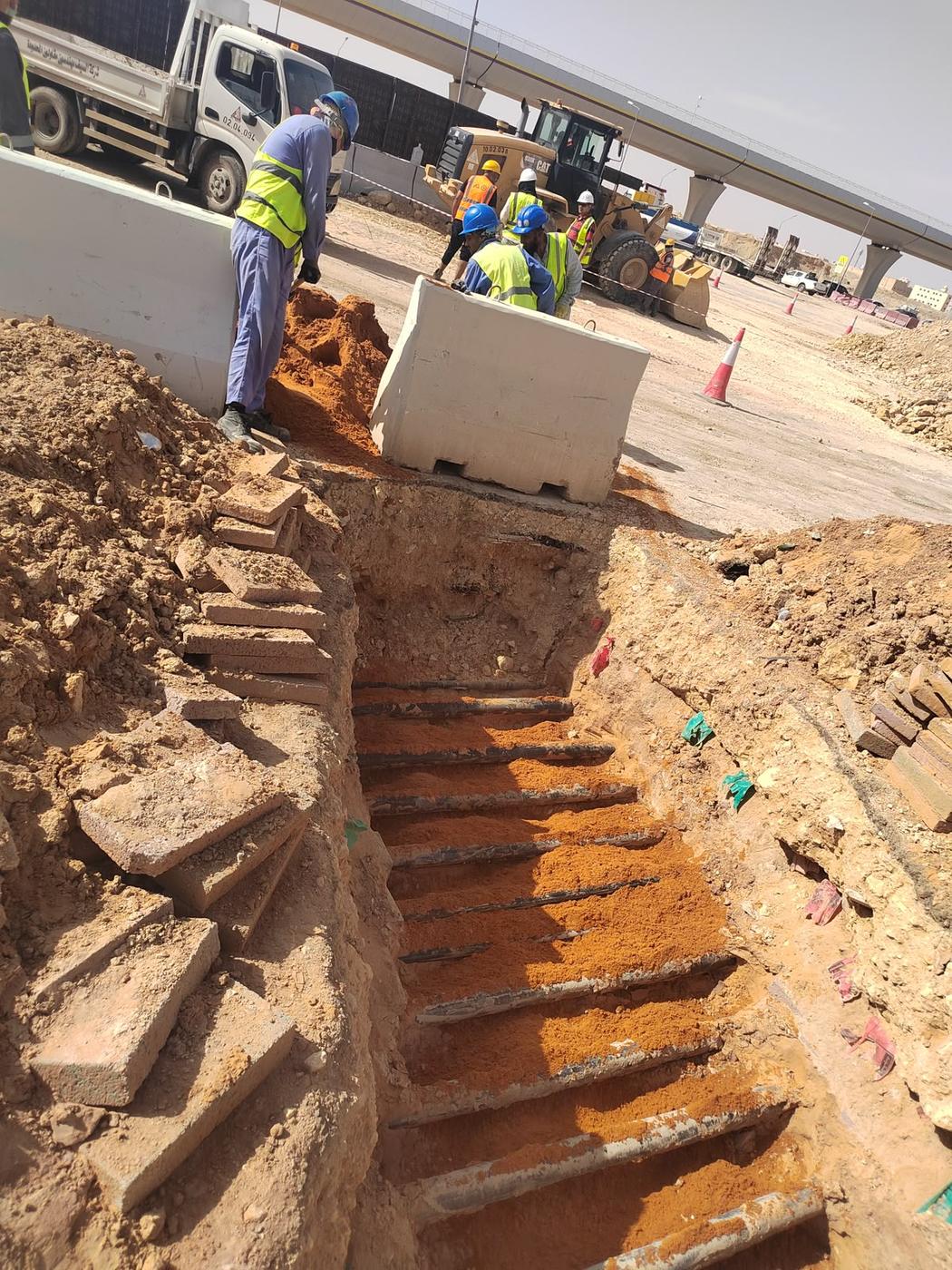
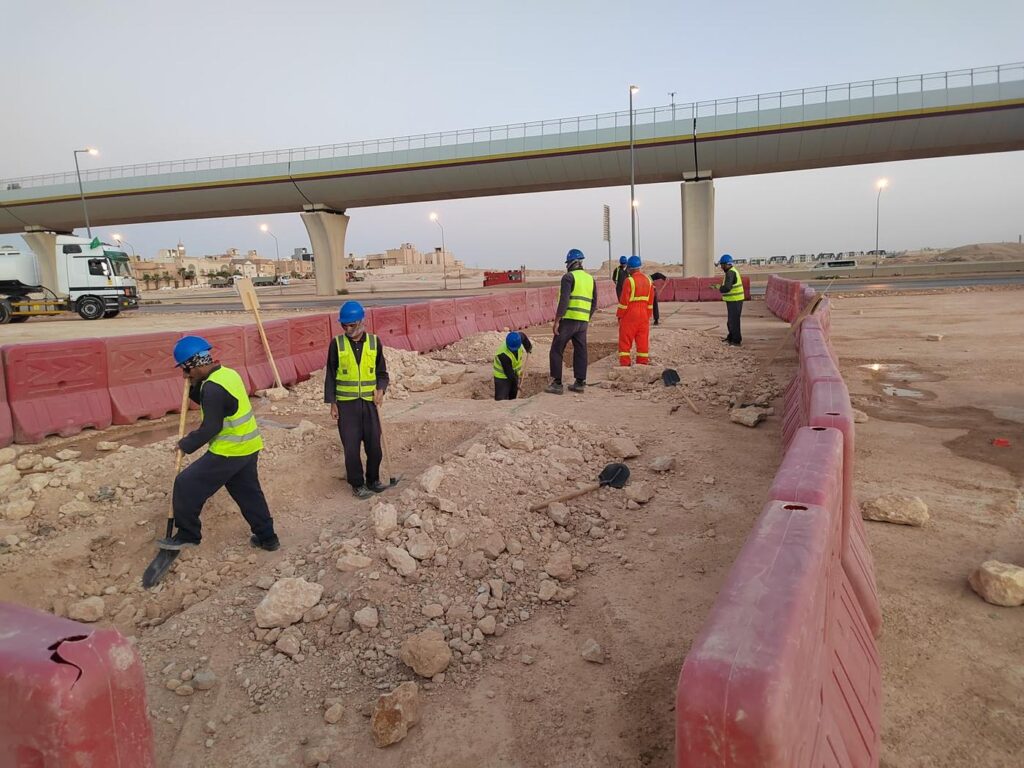
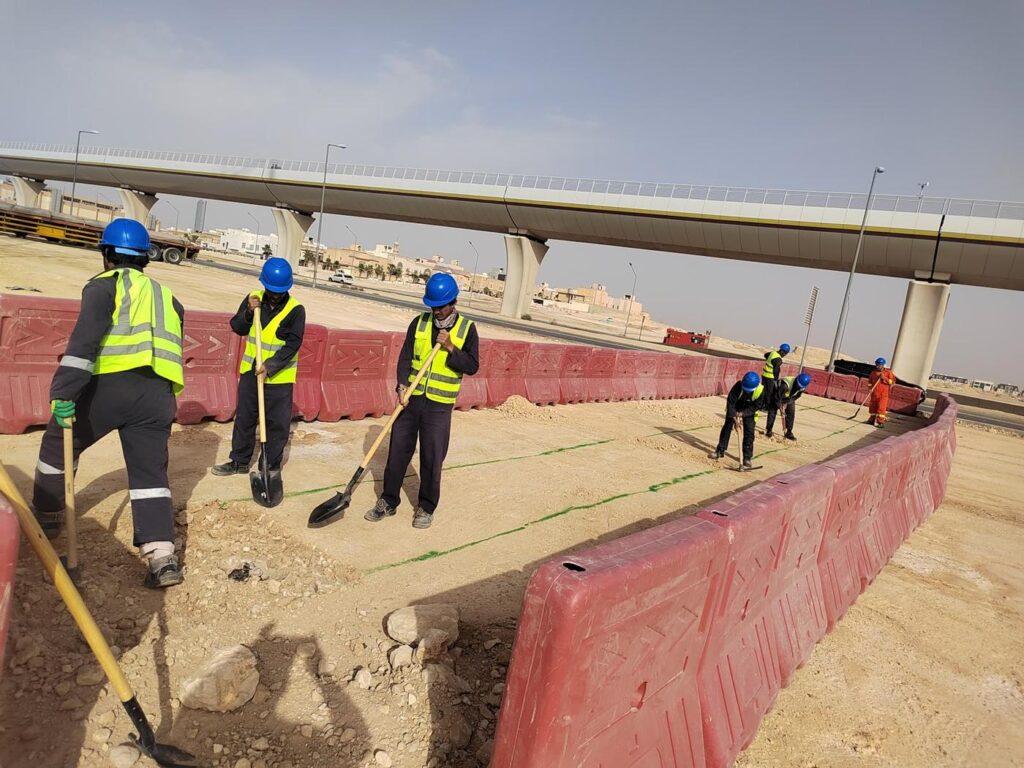
A trial pit is a small hand-dug or carefully excavated hole that exposes the services so they can be seen and measured.
- Confirms the type, size and material of each service
- Gives the true depth and position, measured with a tape and surveyed in
- Shows the condition of ducts and pipes
- Satisfies authority and client requirements for verification
Its limits: it only tells you about the ground inside the pit. A service one metre away may be missed completely. Trial pits are also slower, need reinstatement, and on live roads need permits and traffic management.
The right order: survey first, then dig
The best approach is simple:
- Collect records. Gather existing utility drawings from the authorities and the client.
- Survey the site. Run GPR and electromagnetic locating across the whole area and mark everything on the ground.
- Choose the trial pit locations. Place pits where they answer the most important questions: at crossings, where records and survey disagree, near high-voltage cables and large mains, and where the new works will dig deepest.
- Dig and verify. Expose the services, record them and survey their positions.
- Update the drawing. Add the verified information so designers know which services are confirmed.
This is the same logic as the PAS 128 quality levels, where detection by survey is followed by verification by excavation.
What it saves
Digging trial pits without a survey first means guessing where to dig, and often digging more pits than needed. Relying on GPR alone means the most critical services are never confirmed. Used together, the survey reduces the number of pits, and the pits make the survey trustworthy. Both cost far less than a damaged power cable, a cut fibre route or a flooded excavation.
Frequently asked questions
How many trial pits does a project need?
It depends on the site and the risk. We recommend pits based on the survey results, focusing on crossings, critical services and areas of uncertainty.
Are trial pits dug by hand?
Near live services, yes. Hand digging or vacuum excavation is used to avoid damaging what we are trying to find.
Can GPR replace trial pits completely?
No. GPR greatly reduces the number of pits needed, but critical services should still be verified by excavation before major works.
Plan your utility survey and trial pits
EarthScape provides GPR, cable locating and trial pit verification as one service across Saudi Arabia. See examples in our project portfolio, or send your site details through our Get a Quote page.