One wrong cut with an excavator can take down a power line, flood a site or put a worker in hospital. Yet many projects still start digging based on old drawings or a quick look at the surface. Underground utility detection in Saudi Arabia is one of the simplest and most cost-effective ways to protect people, schedules and budgets. This article explains why locating utilities before excavation matters, which methods are used, and how to build utility detection into your project from day one.
EarthScape Technologies has helped contractors, consultants and developers find what lies beneath their sites for more than 5 years, with 20+ experts and 100+ completed projects across the Kingdom, working from our office in Riyadh.
The Hidden Network Under Every Site
Beneath roads, plots and existing facilities lies a dense network of services: power cables, telecom and fibre ducts, water mains, sewer and drainage lines, irrigation pipes, gas and fuel lines, and street lighting cables. In fast-growing cities and industrial areas, these services have been installed over many years by different owners and contractors.
The result is that records are rarely complete. Common problems include:
- Services that were never recorded, or recorded in the wrong position
- Abandoned lines that still appear on drawings, and live lines that do not
- No depth information, or depths that changed after regrading and roadworks
- Plastic and concrete pipes that cannot be found with simple cable locators
The Real Cost of a Utility Strike
Safety Risks
Striking a high-voltage cable can cause electric shock, burns and arc flash injuries. Damaging a gas or fuel line can lead to fire or explosion. Pressurized water mains can flood and destabilize excavations. Worker safety is the first and most important reason to locate utilities before excavation.
Project Delays
After a strike, work usually stops while the damage is assessed and repaired, and while the incident is investigated. A short excavation task can turn into days or weeks of lost time, with crews and equipment standing idle.
Repair Costs and Liability
The party responsible for the damage may have to pay for repairs, service outages and claims from utility owners and affected customers. Redesign may also be needed if a major service is found exactly where a foundation or new pipe was planned.
Reputation
Clients and main contractors remember who caused outages and incidents. A clean safety record helps you win the next project.
How Underground Utility Detection Works
Professional utility detection combines several methods, because no single tool finds everything.
Records Review and Site Reconnaissance
The first step is to collect existing utility records and walk the site, recording visible features such as manholes, valve covers, cabinets and marker posts. This shows what to expect and where to focus.
Electromagnetic Location (Radio Detection)
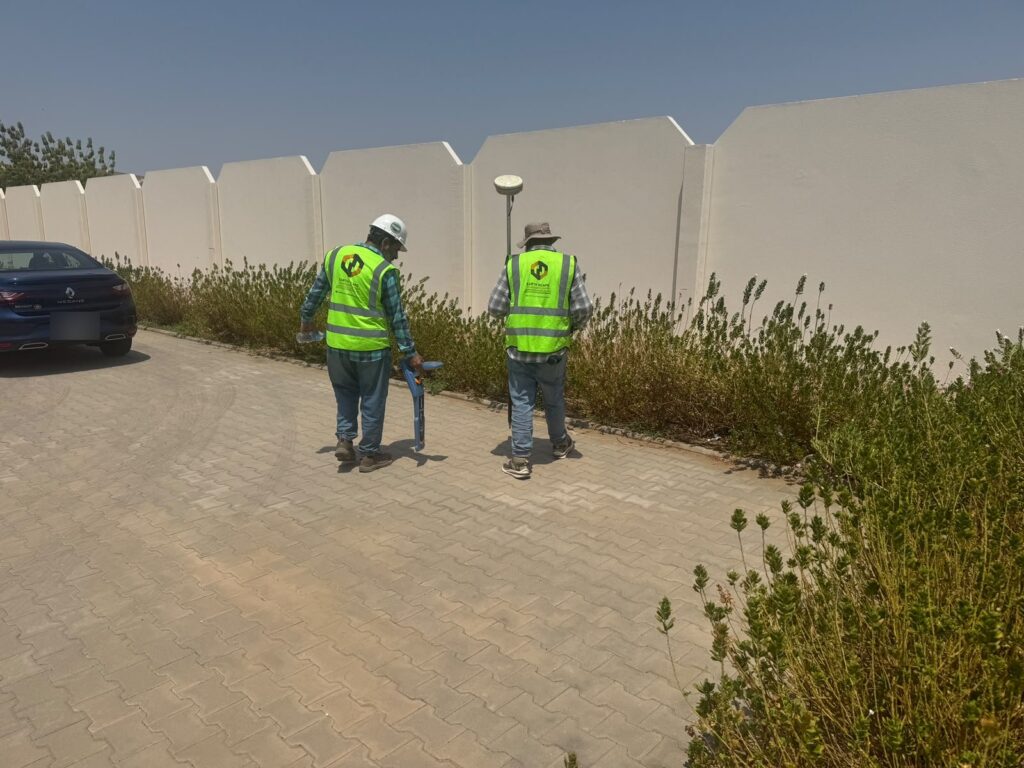
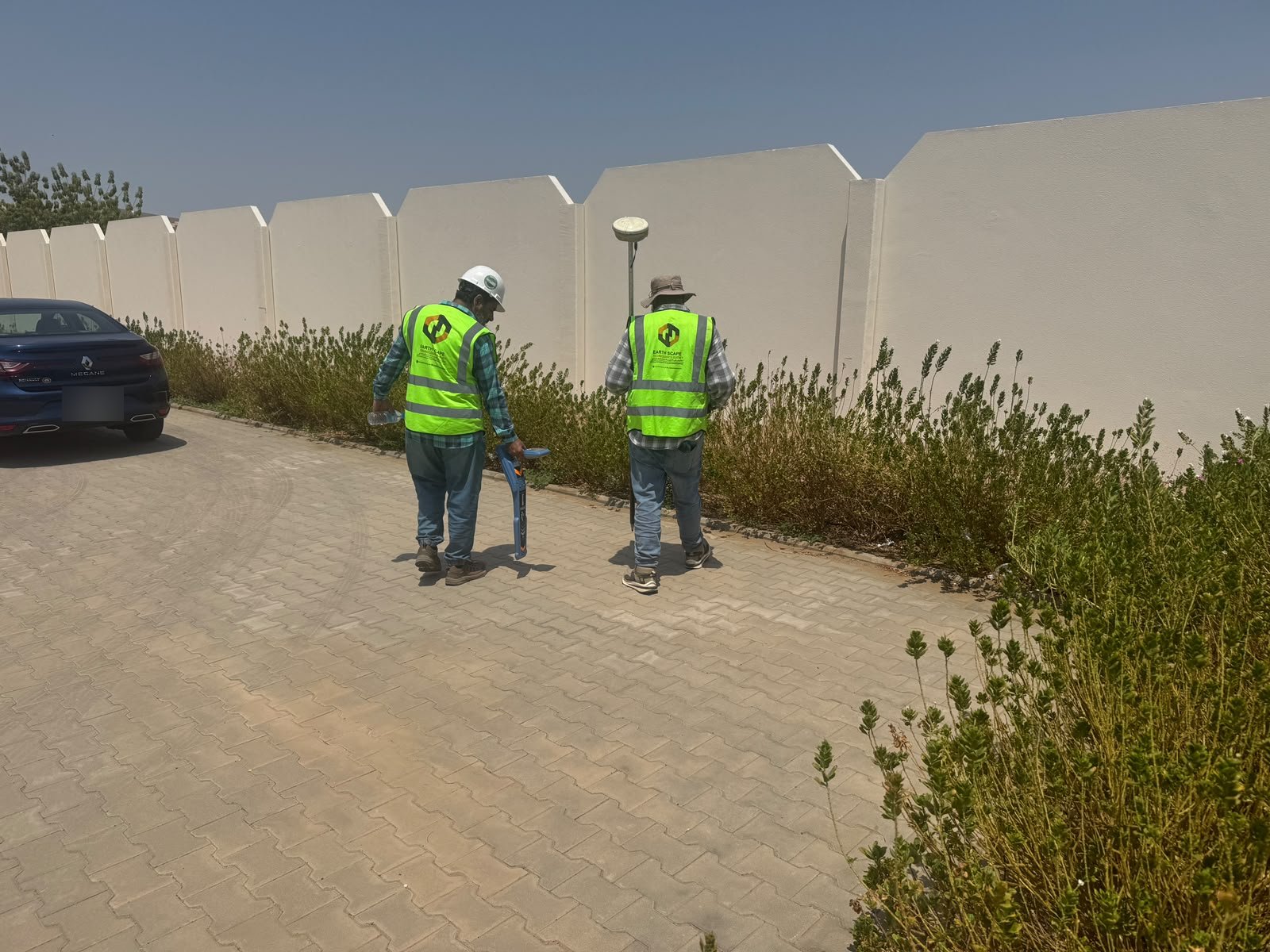
EML locators detect the electromagnetic field around metallic cables and pipes. In passive mode they pick up signals already on live cables; in active mode a transmitter applies a signal to a pipe or cable so it can be traced along its route. Learn more about our cable and pipe locating service.
Ground Penetrating Radar (GPR)
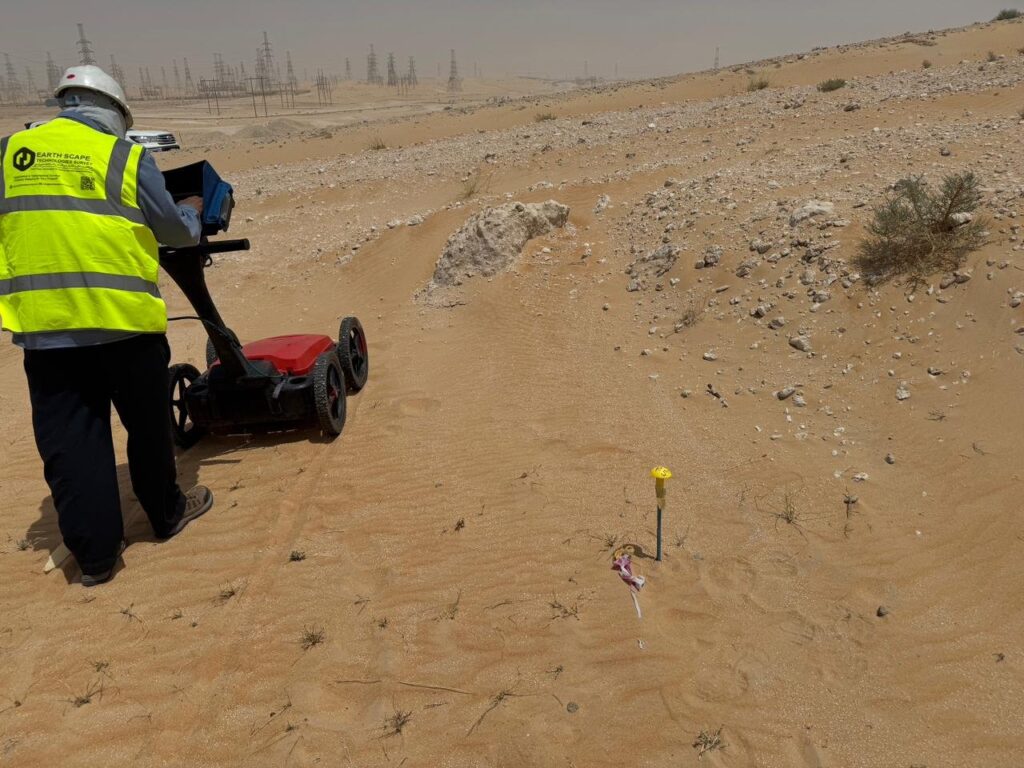
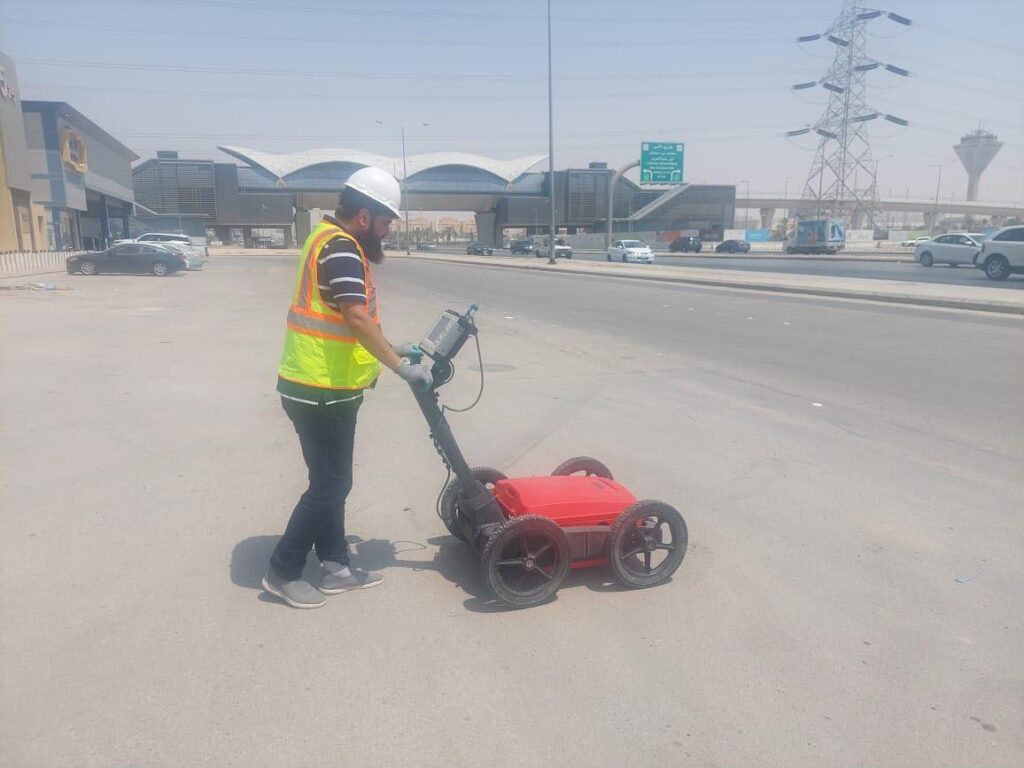
GPR sends radar pulses into the ground and records reflections from buried objects. It can detect non-metallic pipes and ducts that EML cannot, and it helps confirm metallic services found by EML. See our ground penetrating radar service for details.
Trial Pits for Verification
Where the risk is high or detection results are uncertain, utilities are exposed by careful hand digging or vacuum excavation in trial pits. This confirms the exact position, depth, type and size.
Survey and Drawings
All detected services are positioned with GNSS or total station and delivered as CAD drawings, and BIM models where required, so designers and site teams work from the same accurate information.
For projects that need a recognized standard, these methods are delivered as a PAS 128 utility survey, where every utility carries a quality level from QL-D (records) to QL-A (verified by exposure).
When Should You Locate Utilities?
The best time is before design is fixed, not the day before digging. Utility detection is valuable at several stages:
- Design stage: avoid clashes and costly redesigns by knowing where services are before routes and foundations are finalized
- Before excavation, trenching and piling: confirm the current position of services in the work area
- Before drilling and coring: scan concrete and ground for cables and pipes
- During expansion of existing facilities: where decades of services may have been added and modified
A Simple Pre-Excavation Checklist
- Collect all available utility records and as-built drawings for the site.
- Obtain the permits and approvals required by the relevant authorities and utility owners.
- Commission a professional utility detection survey covering the full work area plus a safe buffer.
- Mark detected utilities clearly on the ground and on drawings.
- Verify critical services with trial pits before using machinery nearby.
- Brief site teams on the findings and keep the drawings available on site.
- Stop work and reassess if unexpected services are found.
Why Choose EarthScape for Underground Utility Detection in Saudi Arabia?
- 5+ years of utility and geophysical survey experience
- 100+ completed projects for construction, infrastructure and engineering clients
- 20+ experts in field survey, geophysics and CAD/BIM
- Combined methods: EML radio detection, GPR, trial pit verification and survey-grade positioning
- Kingdom-wide coverage from our office in Riyadh, trusted by 40+ clients
Frequently Asked Questions
Why can’t we rely on existing utility drawings?
Existing records are often incomplete, outdated or inaccurate in position and depth, and they may not show every service. A utility detection survey checks what is actually in the ground today.
Which method is best for finding underground utilities?
No single method finds everything. Electromagnetic locating is excellent for metallic cables and pipes, while GPR can detect non-metallic services. Combining both, and verifying critical services with trial pits, gives the most reliable result.
Can you detect plastic water pipes?
Often, yes. GPR can detect plastic and other non-metallic pipes by the change in material properties. Results depend on pipe size, depth, contents and ground conditions.
How far in advance should we book a utility survey?
As early as possible, ideally at the design stage. This allows the findings to shape your design and avoids last-minute delays before excavation.
Do you provide utility detection across Saudi Arabia?
Yes. Our office is in Riyadh, and our teams carry out underground utility detection on project sites throughout the Kingdom.
Book Your Utility Detection Survey
Do not start digging on assumptions. Let our team locate the underground utilities on your site before excavation begins. Call +966 55 679 8661, email info@earthscapesurvey.com or share your project details on our contact page.