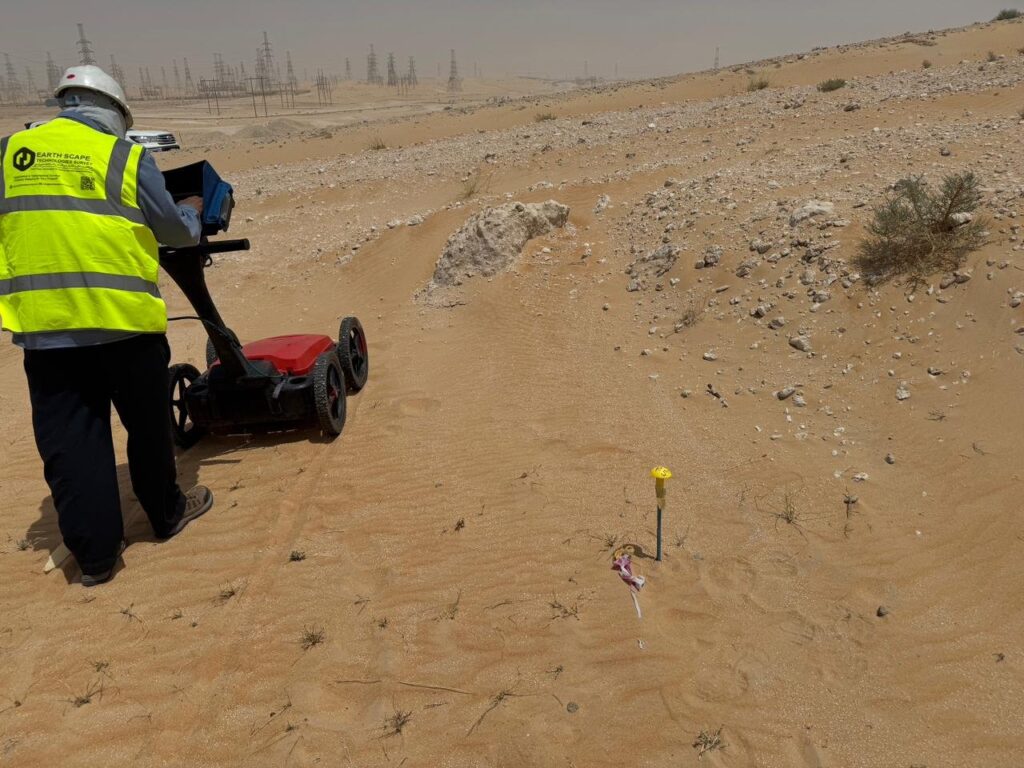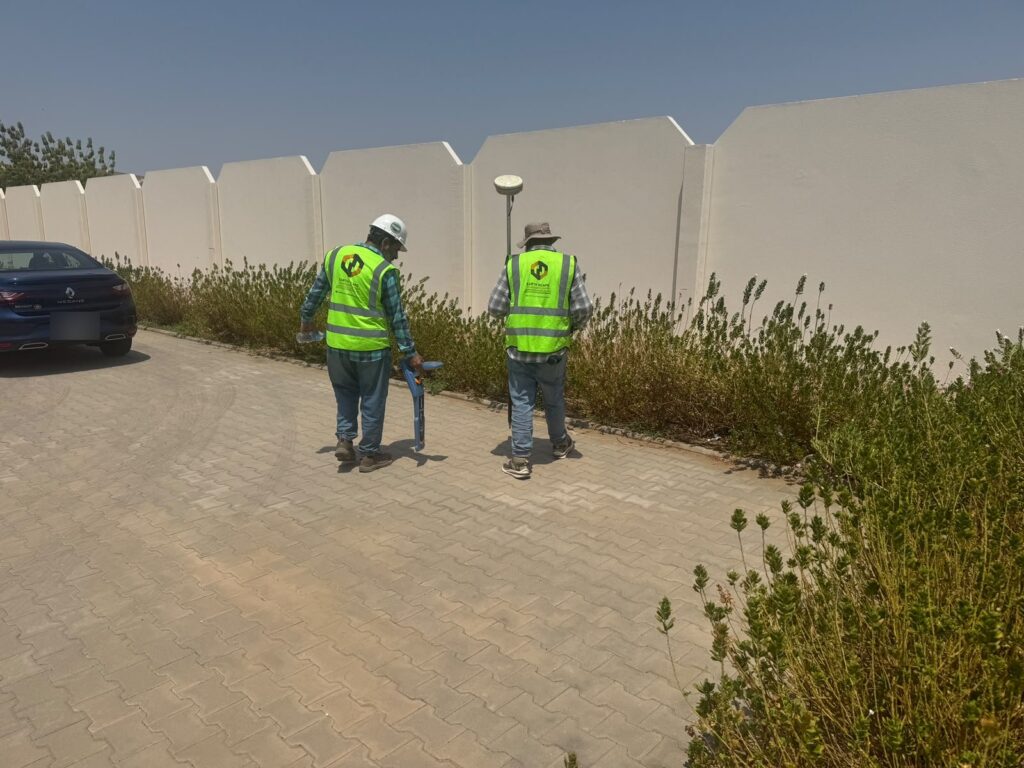
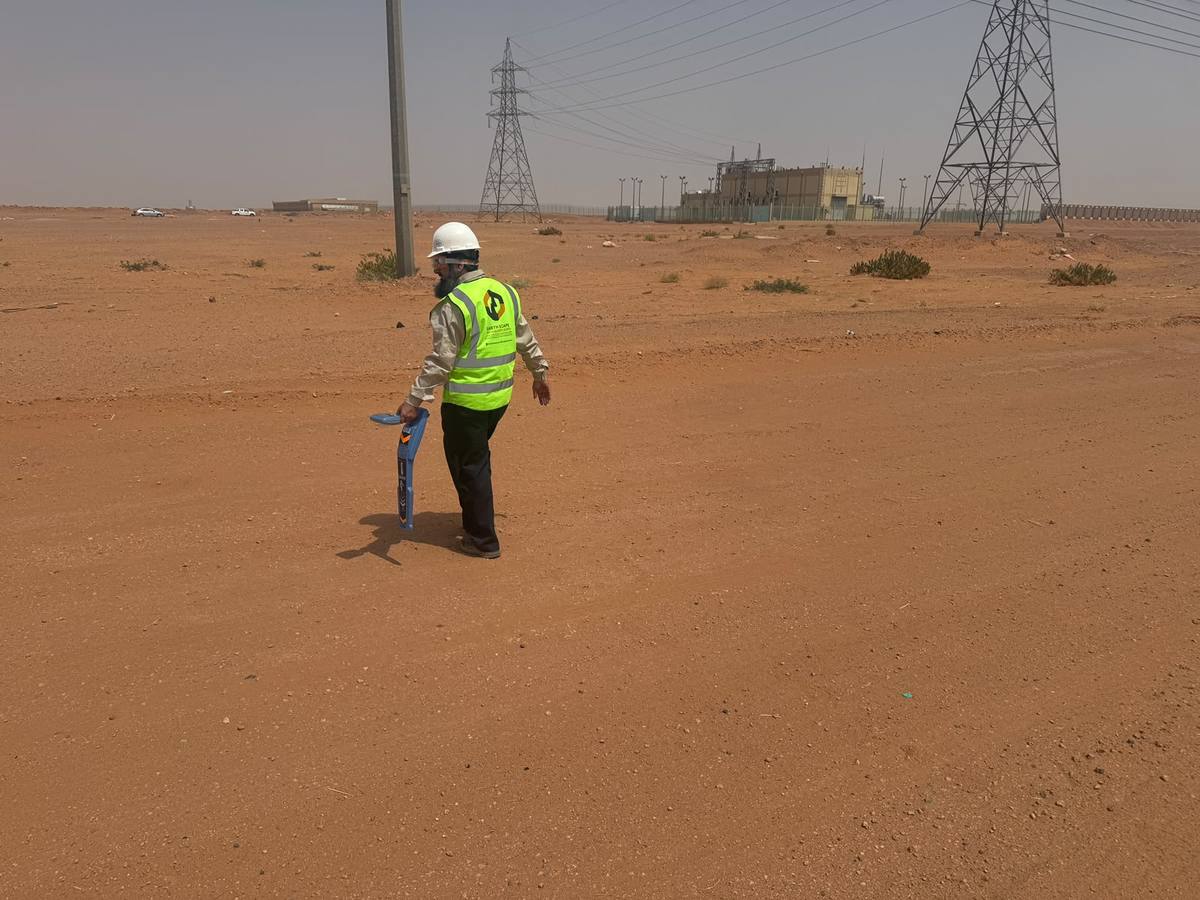
Before any excavator touches the ground, someone should walk the area with a cable locator. It is one of the simplest and most effective ways to avoid hitting a live cable. But a locator is not magic, and knowing its limits is just as important as knowing how to use it. Here is how electromagnetic locating works in practice.
How an electromagnetic locator works
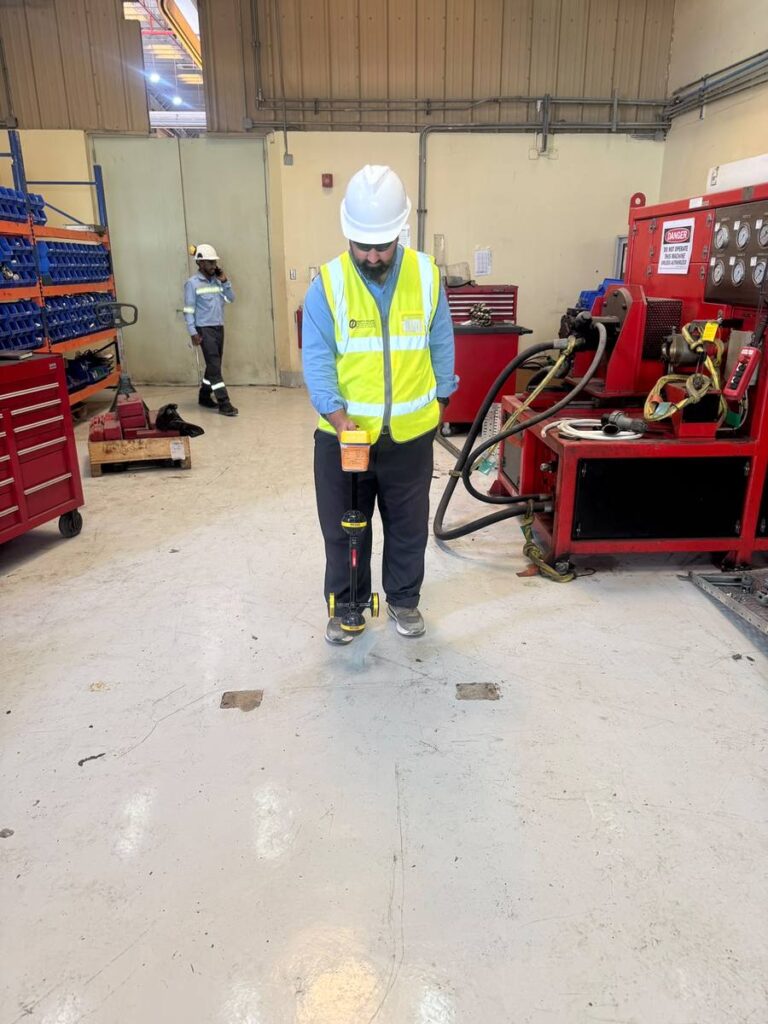
A cable or metal pipe carrying an electrical current produces a magnetic field around it. A locator, such as the Radiodetection RD8200 our teams use, has antennas that pick up this field. As the operator sweeps across the ground, the signal peaks when the receiver is directly above the line. The locator can also estimate depth and, in some modes, the current flowing in the line.
Passive and active modes
Passive locating
Many buried lines already carry a signal. Live power cables give off a 50 or 60 Hz field, and long metal lines pick up radio signals from the air. In passive mode the locator listens for these signals. It is a quick first sweep, but it will not find everything, and it cannot tell you which line is which.
Active locating with a transmitter
For more reliable results we use a transmitter to put our own signal onto a specific line. This can be done by direct connection to an exposed part of the pipe or cable, by a clamp around a cable, or by induction from the surface. The receiver then follows that known signal, so we can trace one service at a time and record its route and depth.
Sondes for non-metallic pipes
Plastic, concrete and clay pipes do not carry a signal. If there is access, we can push a small battery-powered transmitter called a sonde through the pipe and track it from the surface.
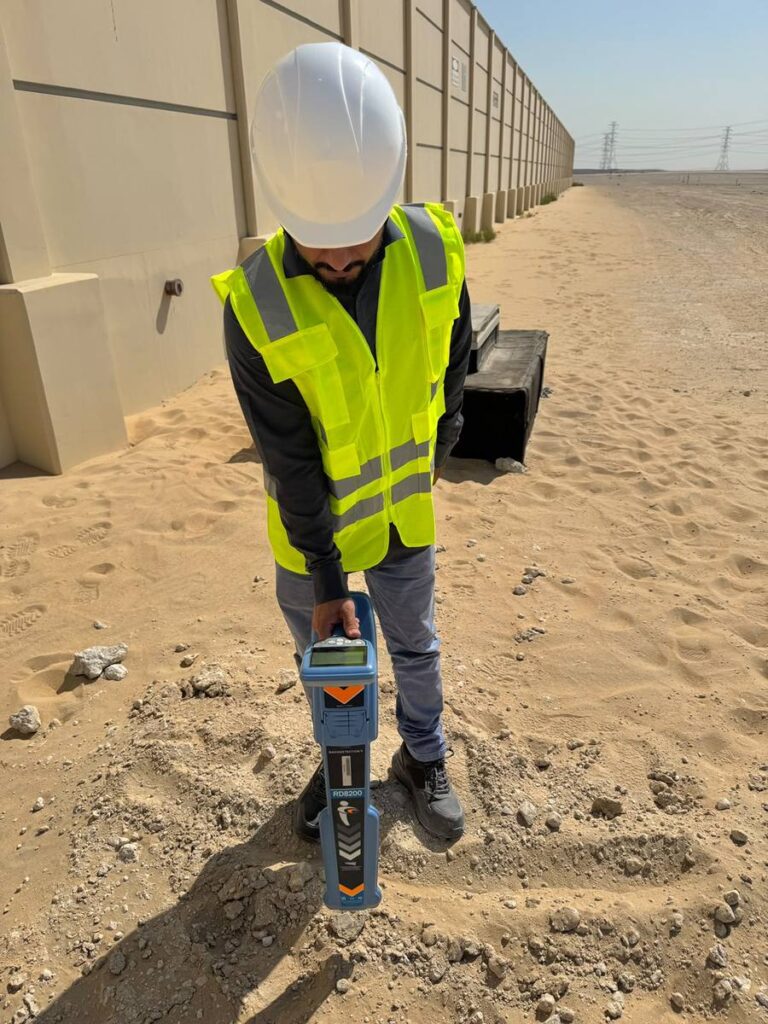
What a locator cannot do
- It cannot find plastic pipes or fibre ducts without a tracer wire or sonde.
- Depth readings are estimates. They can be wrong where several services run close together or signals bleed onto nearby lines.
- Dead or disconnected cables may give no passive signal at all.
- It shows where a signal is, not what the service is.
That is why we never rely on a locator alone on important jobs. We combine it with GPR, which can detect non-metallic pipes and voids, and with trial pits to physically confirm critical services. This combined approach follows the thinking behind PAS 128 utility surveys.
Locating in different environments
On open desert sites near substations and overhead lines, strong passive fields can mask other services, so active tracing is essential. Inside industrial buildings, steel structures and dense services make interpretation harder, and we use careful frequency selection and GPR scanning together. On city roads, there may be dozens of cables in one trench, and we trace them one by one from manholes and cabinets.
Frequently asked questions
Can a cable locator tell the depth of a cable?
Yes, most modern locators estimate depth. The estimate is usually reliable for a single, clear signal, but should be confirmed with a trial pit before excavating near critical services.
Can a cable locator find water pipes?
Metal water pipes, yes. Plastic water pipes cannot be found with a locator unless they have a tracer wire or a sonde is inserted. GPR is used for these.
Is cable locating enough before excavation?
For small, low-risk digs it may be. For most construction work we recommend combining it with GPR and trial pits, as explained in our guide to locating utilities before excavation.
Book a cable and pipe locating survey
EarthScape provides cable and pipe locating across Saudi Arabia, from small plots to large plants and road projects. Send us your site details through our Get a Quote page.